We are not a registered Medicaid Provider

What Does Root Canal Therapy Do?


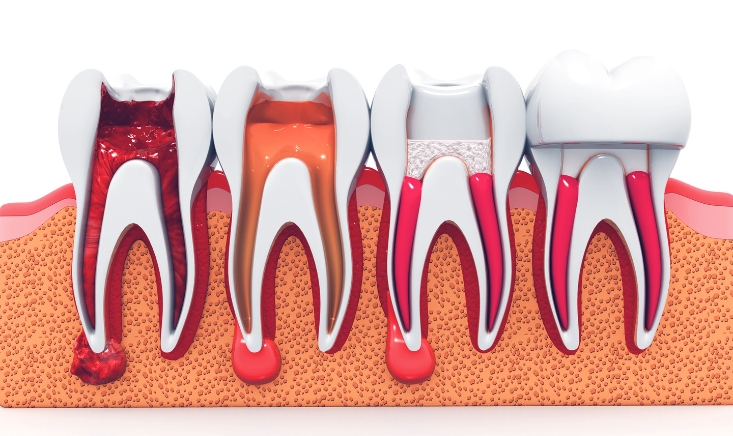
Have you ever heard the term “root canal” and groaned a little? Many people have. Root canal therapy has a bad name. This is because people tell scary tales of pain and agony. But what about the reality? It’s nothing like it’s portrayed. Instead, it’s a tooth-salvage treatment that will bail you out of excruciating pain.
Just imagine: you are savoring your favorite food without the sharp, ongoing toothache. Root canal therapy will make this happen.
What is Root Canal Therapy?
Root canal therapy is a very common dental procedure. It aims to eliminate infection in a tooth. This procedure entails removing the infected or harmed pulp from the tooth interior. It cleans and disinfects the space and fills it so that no further problems can develop.
A tooth comprises several layers: the outer hard enamel, a stabilizing layer known as dentin, and the inner soft pulp. The pulp is where the nerves, blood vessels, and connective tissue go to the roots.
When this pulp becomes infected or inflamed due to decay, trauma, or excessive dental treatment, it can lead to acute pain and abscess. Root canal therapy removes the infection without destroying the natural tooth structure. Advanced methods make this easy. It allows a pain-free way to achieve a healthier smile.
When Is Root Canal Therapy Necessary?
Some signs can indicate root canal therapy. Ongoing tooth pain, mainly while chewing or using pressure, is a significant warning sign. Heat or cold sensitivity, even when the offending material is removed, indicates possible issues. Swelling, soreness of the gums, or discoloration of the tooth are other signals that you may require this work.
Root canal treatment is usually necessary when the tooth’s pulp becomes infected. Untreated cavities, deep decay, or a cracked tooth may result in this infection. Multiple dental treatments on the same tooth can also irritate the pulp. Instead of removing the infected tooth, this procedure saves the tooth. It can keep your natural smile and oral function intact. Early dental treatment can make all the difference in saving your tooth.
How Root Canal Therapy Works?
Root canal therapy in coral gables takes several accurate steps, each to eradicate infection and save the tooth’s functionality:
Diagnosis and X-rays: A professional dentist diagnoses the tooth and considers X-rays to check how far the damage has reached. This will help understand whether or not the pulp is infected or inflamed.
Numbing the Area: To begin with, the dentist injects a local anesthetic. This helps ensure the process is not painful. Contrary to common myths, root canals are not more painful than having a normal filling.
Removing Infected Pulp: The dentist makes a small access in the tooth through which he enters the pulp chamber. Once done, the infected or broken-down pulp is removed using special instruments.
Cleaning and Disinfecting the Canal: Once the pulp is removed, the tooth’s interior is cleaned and disinfected. This prevents infection and prepares the area for filling.
Filling and Sealing the Canal: Dentists fill the cleaned root canal with gutta-percha, a biocompatible substance that stabilizes the tooth structure.
Placing a Crown or Restoration: Lastly, the dentist restores the tooth with a crown or a filling. This strengthens the tooth so that it can function normally and fit perfectly with the rest of the teeth.
Benefits of Root Canal Therapy
Root canal procedure has some significant benefits:
Pain Relief: It removes the pain source due to infection or inflammation.
Saves the Natural Tooth: Keeping your natural tooth is always better than extraction.
Restores Normal Function: You can chew, bite, and speak as usual. Moreover, it will enhance your quality of life.
You should not ignore the symptoms, as they can develop into more serious issues. Therefore, if you have ongoing toothache or sensitivity, seeing a dentist as soon as possible is important.
Don’t be afraid—root canal treatment could be the speedy and efficient answer your smile has been waiting for. Call our dentists today to find out about this tooth-saver!