We are not a registered Medicaid Provider

How Bone Grafts Impact Your Dental Implant Treatment at Miro Dental Centers


Dental implants are one of the top-tier dental treatments that can replace missing teeth and restore your dental health to its finest. However, not everyone has enough healthy bone to support the implant. This is where bone and soft tissue grafting come into play. At Miro Dental Centers in Kendall, we understand the importance of ensuring that your implant has a solid foundation for long-term success. If you’ve been told that you need a bone graft before getting a dental implant, you might be wondering how this process affects your treatment.
In this blog, we’ll break down how bone grafts work in dental implant treatments, why they may be necessary, and how Miro Dental Centers can help guide you through this process to ensure the best possible results for your smile.
What Are Bone Grafts, and Why Are They Important?
Bone grafting is a procedure in which bone material is placed into areas of the jaw that have insufficient bone mass. The bone graft material can come from several sources, including your own body, a donor, or synthetic materials. The goal of a bone graft is to encourage new bone growth in the jaw, creating a solid base for a dental implant.
When you lose a tooth, the surrounding bone may begin to shrink or resorb over time, especially if the tooth has been missing for a while. Without enough bone, your dentist may recommend a bone graft to ensure there is enough healthy tissue to anchor the implant.
How Does Bone Grafting Affect Your Dental Implant Treatment?
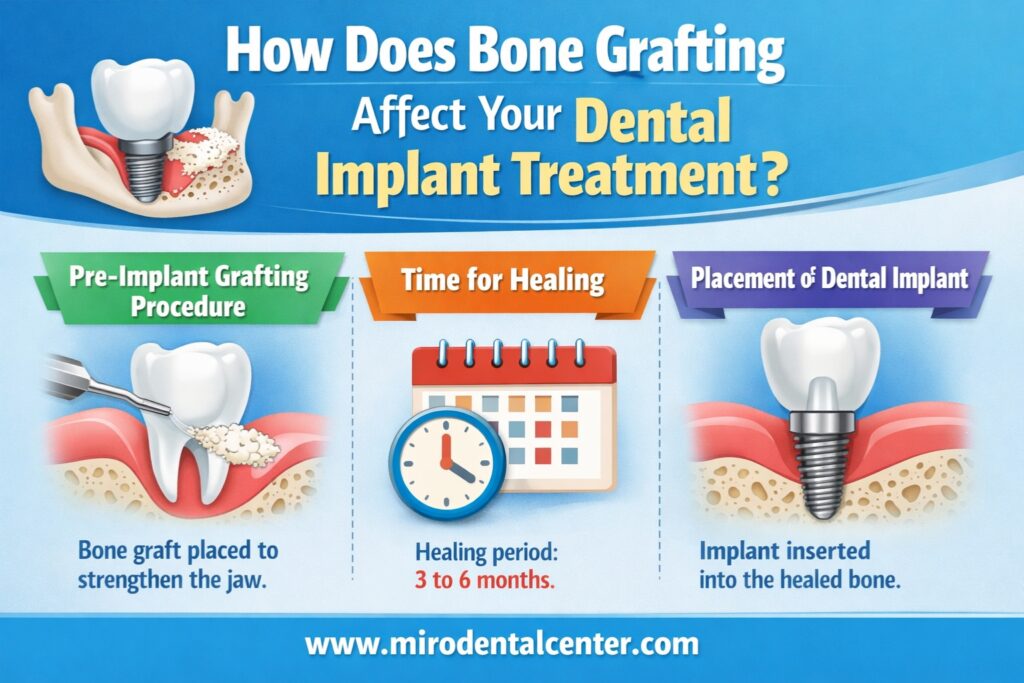
If your dentist determines that you need a bone graft, it will be integrated into your implant treatment. Here’s a step-by-step look at how bone grafts affect your dental implant journey:
1. Pre-Implant Grafting Procedure
Before placing a dental implant, a bone and soft tissue graft is necessary. The procedure can be done in one of two ways:
- Sinus lift: If the upper jaw is lacking bone, especially in the back of the mouth, a sinus lift procedure may be required. This involves adding bone graft material under the sinus cavity to promote bone growth.
- Socket grafting: If the bone loss occurred immediately after tooth extraction, a socket graft may be performed to preserve the bone structure for the implant.
These grafts require healing time, which can range from a few months to ensure the bone has integrated well.
2. Time for Healing
After the bone graft, your dentist will monitor the healing process. The graft material will gradually fuse with the surrounding bone, a process known as osseointegration. This is crucial because it forms a stable, strong foundation for your dental implant.
At Miro Dental Centers in Kendall, we monitor our patients closely during this healing phase to ensure optimal recovery. It’s important to be patient during this time, as it directly affects the success of your dental implant.
3. Placement of Dental Implant
Once the bone has healed and integrated with the graft material, your dentist will proceed with placing the dental implant. The implant will be anchored in the newly strengthened bone, and osseointegration will begin again, this time with the implant itself.
Benefits of Bone Grafting for Dental Implants
While bone grafting adds an additional step to the dental implant process, it offers numerous benefits that are crucial for the success and longevity of the implant:
- Better Implant Stability: Bone grafts provide a more solid foundation for the implant, ensuring long-term durability.
- Enhanced Aesthetic Outcome: A stable bone structure helps ensure that the dental implant fits naturally, improving the overall aesthetic of your smile.
- Reduced Risk of Implant Failure: Without sufficient bone support, the risk of implant failure increases. Bone grafting reduces this risk and improves the chances of success.
The Bone Grafting Process at Miro Dental Centers
At Miro Dental Centers, we take a personalized approach to each patient’s dental care. When bone grafting is necessary, we use the latest techniques to ensure the best outcome. Here’s what you can expect during the procedure:
- Consultation and Evaluation: Your dentist will perform a comprehensive evaluation, which may include digital imaging and scans, to determine the amount of bone you have and the type of grafting material needed.
- Grafting Procedure: The procedure is done under local anesthesia to ensure your comfort. The graft material is carefully placed in the affected area.
- Healing and Follow-Up: After the grafting procedure, we will schedule follow-up visits to monitor healing. Once the bone is ready, the implant can be placed.
At Miro Dental Centers in Kendall, we provide exceptional care throughout your dental implant journey, including any necessary bone and soft tissue grafting. Whether you are considering dental implants or need a bone grafting procedure, we are here to guide you through every step. Call us at (305) 203-5114 or visit our website to book an appointment!
People Also Ask
Q: How long does it take for bone grafting to heal before getting a dental implant?
Healing time for bone grafting can vary, but typically takes between 3 and 6 months. Your dentist will monitor the healing progress to ensure it’s ready for implant placement.
Q: Does bone grafting hurt?
A: Bone grafting is generally performed under local anesthesia, so you won’t feel pain during the procedure. There may be some discomfort during the healing phase, but it is usually manageable.
Q: Is bone grafting always necessary for dental implants?
A: Bone grafting is not always necessary. It is recommended that there is insufficient bone in the jaw to support the dental implant. Your dentist will evaluate your situation and recommend the best course of action.
Q: What are the risks of bone grafting?
A: While rare, risks include infection, graft rejection, or insufficient bone formation. However, with the right care and monitoring, these risks can be minimized.
Q: Can I eat normally after a bone graft?
A: After bone grafting, it’s advisable to stick to soft foods and avoid chewing directly on the graft site. Your dentist will provide specific guidelines to ensure proper healing.